


Best Outdoor Playsets of 2026: A Buying Guide for Every Backyard

Every spring, the same search happens a few million times. Parents, grandparents, and first-time homeowners open a browser tab looking for the best outdoor playset, spend forty-five minutes on Amazon and a handful of review sites, and close the tab more confused than when they started.
The price range is enormous. The specs are hard to compare. And most review sites are ranking products they've never touched based on specs scraped from manufacturer pages.
In this guide, we tell you what actually matters when you're choosing an outdoor playset in 2026, explain where our product fits and where it doesn't, and give you an honest framework for making the decision based on who's using it and what your yard actually looks like.
What Actually Matters in 2026
The outdoor playset market has changed in the last five years. Cedar prices went up. Supply chain disruptions pushed a lot of brands toward lower-grade pressure-treated lumber or plastic composites.
At the same time, a generation of buyers who grew up with Gorilla Playsets in their yards is now buying for their own kids and asking harder questions about materials, longevity, and what happens when the structure outlasts the kids' interest.
Four things actually matter.

Materials.
Cedar is a real wood with a real lifespan, ten to fifteen years with annual sealing.
Pressure-treated pine is durable but requires the same maintenance.
Powder-coated steel doesn't need sealing, but needs hardware inspections every season.
UV-resistant fabrics and panels vary widely in quality. Ask for specific material names, not marketing language like "weather-resistant" or "durable construction." Full details on what Bijou uses are on The Bijou Difference.

Installation.
Concrete footings are permanent. If you move, you leave the structure. If your kids outgrow it in five years, removal is a project.
Freestanding structures that stake into the ground are more flexible, but check the stake depth and footprint requirements for your surface type. How Bijou installs covers this in detail.
Age range.
Most playsets are designed for a five- to seven-year window. The structure that's perfect for a four-year-old is often irrelevant by the time that kid is eleven.
If the system doesn't have a genuine add-on ecosystem, you're buying for one phase of childhood. Check age range guidance for how to think about this across the Bijou system.

Exit strategy.
This is the question no one asks at the point of purchase. A cedar swing set bolted into concrete has essentially zero resale value and real removal costs.
A freestanding modular structure can be sold, moved, or reconfigured. Worth thinking about before you commit.
The Best Outdoor Playset For Each Type of Buyer
For Families With Kids Ages 3 to 8
This is the most competitive part of the market, and the cedar brands do this well. Gorilla Playsets make solid structures with fixed configurations that work great for a primary-school-aged kid.
If you own your home, have a large yard, and want a fully configured play area from day one, a mid-range cedar set in the $1,200 to $1,800 range is a reasonable investment.
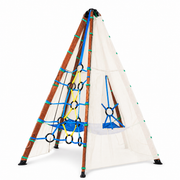
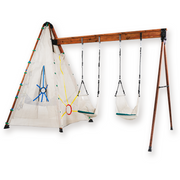
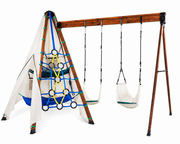
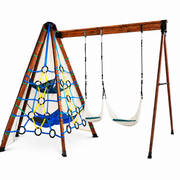
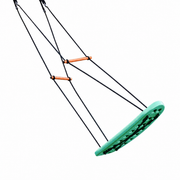
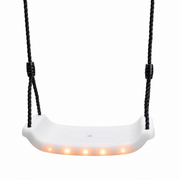
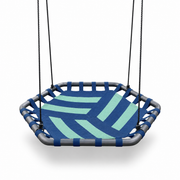
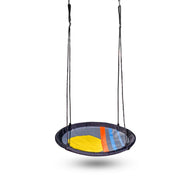
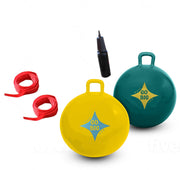
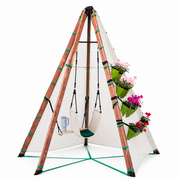
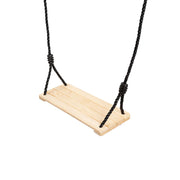
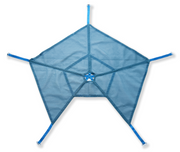
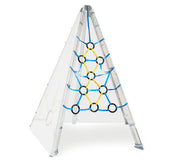
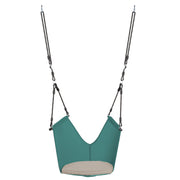
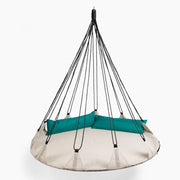
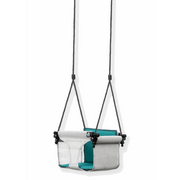
Where the Mainstay wins in this category is the add-on system. The base structure includes a clamber climbing panel and hover platform. Add the Swing Arm and a Baby Swing for toddlers, then swap in the Sway Swing or Sky Hover Swing as they get older.
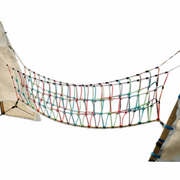
The Rambler Rope Bridge and Next Level Platform extend the structure for the 7- to 12-year-old range without buying a new frame.
For Small Yards and Renters
This is where traditional cedar sets fall short. The usual structures with a fort and multiple swings require a footprint of roughly 16 by 16 feet plus safety clearance. Most rental yards and urban homes don't have that. Even those that do often can't accommodate concrete footings without landlord approval.
The Mainstay has a 12-by-12-foot footprint assembled, sets up on grass, patio, or deck without concrete, and can be repositioned without disassembly. This is the most common reason people in urban and suburban markets choose it over traditional alternatives. More on how Bijou works in small spaces.
For Grandparents and Retired Adults Who Want to Actually Use the Yard
This is the persona most playset guides ignore entirely, and it's a real one. A grandparent who has the grandkids every weekend doesn't need a competitive climbing structure.
They need something that works for a five-year-old in the morning and holds two adults in the afternoon. Something that looks good enough that they'd actually put it in their yard. Something that folds away if they're going to Florida for January and February.
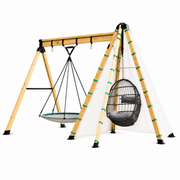
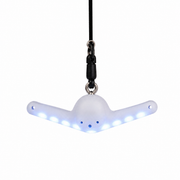
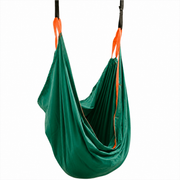
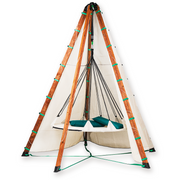
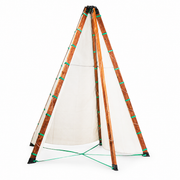
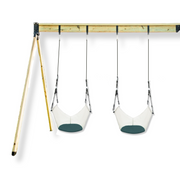
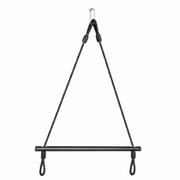
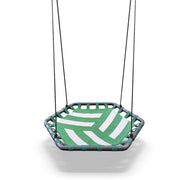
The Nest is built for this. The Haven structure with a Sky Hover Swing is a shaded outdoor lounging setup that works as a reading spot, a place to sit with a friend, or a swing for a grandkid depending on the hour.
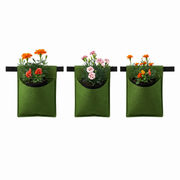
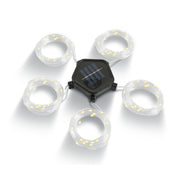
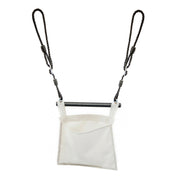
Solar-powered LEDs come on in the evening without any setup. It goes up on a patio without stakes and folds for seasonal storage. The Moment of Zen adds the Sway Swing, Expander Bar, hanging pocket, and Bloom Planter Bags for a fuller outdoor living setup. See the full outdoor living collection.
The honest framing: if the grandkids visit but the structure also needs to be somewhere a sixty-five-year-old actually wants to sit and read on a Tuesday afternoon, a cedar swing set isn't the answer. The Haven setup is.
For Young Adults Who Want Outdoor Living Now and a Play Structure Later
This buying pattern has become more common as home ownership ages later and first homes often come with smaller yards or patios. A thirty-two-year-old couple buying a house doesn't necessarily have kids yet, but they want to use the backyard and want a structure that makes sense when the kids do arrive.
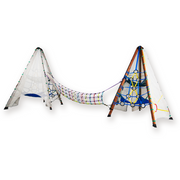
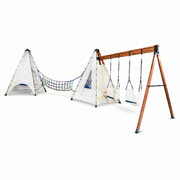
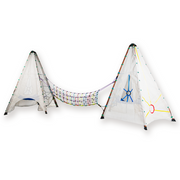
The Bijou system is the clearest fit for this. Start with the Haven and a Sway Swing as a backyard lounge. When kids arrive, connect the Haven to a Mainstay via the Rambler Rope Bridge.
Add the Clamber Panel and Next Level Platform as the kids grow into active climbing. The full system for how adults use Bijou is worth reading if this is your situation.
For Families Who Want a Set That Lasts the Full Childhood
If longevity is the priority, the question is less about which brand and more about what you're maintaining. Cedar needs to be sealed every one to two years to prevent checking and graying.
Pressure-treated pine holds up better without maintenance but has a less natural look. Powder-coated steel and UV-resistant panels don't need sealing but should be inspected annually for hardware integrity.
How long do wooden swing sets last? With consistent annual maintenance, a high-quality cedar structure can last twelve to fifteen years. A pressure-treated set in a wet climate with no maintenance tends to show significant weathering by year five.
The Bijou steel and Teslin panel construction holds up without seasonal maintenance beyond hardware checks. The 5-year manufacturer's warranty covers structural integrity. Full material specs are at The Bijou Difference.
The Maintenance Reality Check
Here's what annual maintenance on a cedar playset actually involves. Sand any rough spots that developed over the season, particularly on handrails and steps where skin contact is frequent. Check and tighten all hardware; bolts back out over time due to wood movement and use. Inspect any rope components for fraying. Apply a UV-protective sealer to all wood surfaces, which takes a few hours across a full structure. Let it cure before kids use it again.
That's a half-day project once a year, assuming you stay on top of it. If you skip a year in a wet climate, you're looking at more significant work: sanding back grayed and checked surfaces, possibly replacing boards that have taken on moisture at connection points.
None of that is onerous if you know it going in. It becomes a problem when people buy a cedar structure expecting it to be maintenance-free and then feel like the structure has failed them when it starts showing wear. It hasn't failed. It's doing exactly what wood does outdoors without intervention.
If annual sealing is something you'll genuinely do, cedar is a great choice and looks beautiful for it. If you're someone who will realistically not get to it most years, a steel and UV panel system that needs hardware checks but no sealing is probably a better fit.

The Add-On System Question
Most outdoor playsets have accessories. Not all of them have a real add-on system. The difference matters.
An accessory is something the manufacturer sells that works with their product. An add-on system is a hardware architecture that lets you meaningfully change what the structure does over time. A few extra swings are an accessory. A climbing wall, elevated platform, and 14-foot rope bridge that all attach to the same base frame through the same hardware is an add-on system.
The question to ask any brand is: if I buy this base structure today and want to add a rope bridge in two years, does the hardware support that without modification? And if my kids are nine and eleven by then and want something that works for older kids, does the add-on catalog extend into that age range?
For most fixed-configuration playsets, the honest answer is that the accessories are limited and age-specific. They're designed for the same age window as the base structure.
The Bijou accessories are built around a single hardware system that runs from the toddler swing all the way through the Rambler Rope Bridge and the adult-rated Sway Swing.
That's not a selling point we'd highlight if it weren't genuinely how the system works. It's also the main reason the Bundle Builder exists, so you can start with what makes sense now and add what makes sense later, without replacing anything.
FAQs
What is the best outdoor playset in 2026?
There's no single answer because the right playset depends on yard size, the ages of the kids, whether installation is an option, and whether adults will use the structure.
Cedar sets are the strongest traditional options for large yards with permanent installation. The Mainstay is the strongest option for families who need a modular, non-permanent structure that grows as the kids do and works for adults too.
What is the best playset for a small backyard?
A structure with a smaller footprint and no concrete installation requirement. The Bijou Mainstay assembles in a 12 by 12 foot area, sets up on grass, patio, or deck without stakes or concrete, and can be repositioned without disassembly. More on how Bijou works in small spaces.
How long do wooden swing sets last?
A cedar swing set with consistent annual sealing can last twelve to fifteen years. Pressure-treated pine is more durable without maintenance but tends to show weathering by year five to seven in wet climates. The Bijou Mainstay uses powder-coated steel and UV Teslin panels that don't require seasonal maintenance, backed by a 5-year structural warranty.
What is the best outdoor swing set for adults?
The Sway Swing and Sky Hover Swing are both rated to 250 lbs and sized for adults. The Haven works as a freestanding single-point swing structure for adults who want a backyard lounging setup without a full play structure. More on adults and Bijou.
What should I put under an outdoor playset?
The most common options are wood chips, rubber mulch, or pea gravel for impact absorption under climbing structures. The Bijou Mainstay stakes directly into grass and doesn't require a separate surface treatment, though families with toddlers often add a mulch ring under the clamber panel and hover platform area. The FAQ page covers ground preparation in more detail.
Is a modular playset worth it?
For families who move frequently, rent, have a smaller yard, or want the structure to serve kids across a wider age range, yes.
The upfront cost is comparable to a mid-range cedar set, the add-on system means you're not buying a new structure as the kids grow, and the portability means the investment moves with you.
For families who own a large yard and want a fully configured structure from day one with no plans to move, a traditional cedar set may be the simpler choice.
One More Thing About Spring
There's a version of this purchase that families make in April under time pressure because the weather turned and the kids are outside and suddenly the yard feels like it needs something. That version of the purchase tends to go fast and not always well.
The better version is the one where you spend twenty minutes thinking about the yard in July, when the kids are actually using it all day, and ask what's missing. Is it shade? Is it somewhere to sit while they play? Is it a climbing challenge that holds a seven-year-old's attention for more than a week? Is it something that makes it easier for you to actually be outside with them rather than watching from a window?
That version of the question leads to a better purchase than "what's the best outdoor playset." Best for whom, doing what, in what yard, at what age, maintained by whom. Those are the questions that narrow it down to something you'll still like in three years.


